Icepops Conference 2019 – Learning how to play the game

Ok, confession time; I’m useless at playing games.  Any kind of games – card games, board games, computer games, strategy games, discovery games, competitive games, for some reason they just don’t hold my attention.   I’m not sure why that is, I just don’t seem to have that “hook” that engages people with game play.  Although I’m not a natural game player, I do really enjoy playfulness and creativity (who doesn’t?!) and copyright literacy is definitely my thing so I really appreciated being able to go along to last week’s ICEPOPS Conference here at the University, not least because my inspirational OER Service colleague Stephanie (Charlie) Farley was giving her first ever keynote.  Icepops is the International Copyright-Literacy Event with Playful Opportunities for Practitioners and Scholars, which is run by Jane Secker and Chris Morrison of the UK Copyright Literacy Team, in conjunction with the CILIP Information Literacy Group.   The themes of the conference this year were copyright education, games and play, music and copyright, creativity and the relationship of copyright literacy to information literacy and scholarly communication.

Melissa Highton, Director of Learning Teaching and Web Services here at the University, opened the conference by welcoming delegates to the University and the city.  Melissa emphasised the importance of copyright as part of the University’s core business and highlighted the role of the OER Service in supporting and developing copyright literacy across the institution.

Simon Anderson gave a really engaging and interactive keynote on copyright infringement in music “Stop me if you think you’ve heard this before”, and yes, he did play snippets of music live on stage and asked us to vote on whether they sounded similar or not. Simon introduced us to the fabulous Lost in Music resource developed by the University of Westminster, a free and open resource that aims to demystify and develop understanding of copyright and infringement within the music industry.  The site includes a wide range of legal case studies and resources including the highly entertaining You Be The Judge, which challenges listeners to decide at what point a piece of music becomes infringing. Simon played this game with us at the conference and it was a lot of fun.  I particularly enjoyed the lightbulb moment when he added one tiny sequence of notes to the piece of music and suddenly everyone in the room recognised it!  I also learned that the Australian band Men At Work were successfully sued in 2010 because their 1983 hit Down Under ripped off the Kookaburra song.  Who knew?  There was also an interesting question about who is responsible for potential copyright infringement in machine generated music.  The answer isn’t yet clear.

Following Simon’s keynote, the rest of the morning was taken up by a whirl wind of amazingly creative copyright education world café sessions and pecha kucha presentations including one fascinating talk on the copyright and performance rights of John Cage’s 4’33”.

Icepops World Cafe, CC BY, Lorna M. Campbell

I also got to take part in my very first escape room challenge run by Katrine Sundsbø of the University of Essex.  The Open Access Escape Room challenged us to thwart a villain who had hidden away all publications by unlocking the research to make everything free.  It was a lot of fun and Charlie and I came away with lots of ideas about how we could adapt the format for an open education escape room for next year’s Festival of Creative Learning.

Charlie Farley & Jane Secker, CC BY, Lorna M. Campbell

The afternoon opened with Charlie’s keynote “Make and release – embedding practice through play”.  Charlie spoke eloquently about the significance of play and creativity in her own life and working practice.  In terms of introducing playful engagement in the workplace, Charlie highlighted the importance of the “lusory attitude”, the mindset we enter into that let us accept the arbitrary rules of a playful space in order to engage with play and creativity.  Charlie said that she found “that by creating a lusory attitude or environment, staff and students are more willing to experiment and learn new technologies and skills with much less fear and apprehension”.  To let us do just that, Charlie led us through a short Board Game Jam session.  It’s always great to see the creativity that results when people engaging with the University’s open licensed image collections through Board Game Jam, and this time was no exception.  As might be expected, the Icepops delegates created some amazing and highly entertaining game scenarios.

Icepops Board Game Jam, C BY, Lorna M. Campbell

During her keynote, Charlie also challenged us to draw or write a short story about our journey to becoming a copyright literacy expert. This is mine 🙂

Chris and Jane brought the conference to a poignant close with a tribute to Marion Kelt, a long standing member of the UK copyright literacy community, who had been due to attend the conference.  Marion’s touching and funny Copyright Comic, a lovely memorial to her, features in the Icepops Annual 2019.

Sadly, I wasn’t able to stay in Edinburgh for the after-conference entertainment, though it sounds like the playful and musical theme of the event continued well into the evening with the Icepops houseband The Infringers XD

It was great to experience the playfulness and creativity of the copyright literacy community at Icepops and I came away with some really cool ideas that we can incorporate into our OER Service digital skills programme.  But perhaps the most important thing I learned at Icepops is that maybe I’m not as bad at playing games as I thought!

PressEDConf19: Supporting Digital Skills with SPLOTs!

This PressED Conference talk by @lornacampbell and @emcandre explored how @EdinburghUni’s Wikimedian in Residence and Academic Blogging Service have used WordPress SPLOTs to develop sustainable open licensed digital skills development resources on engaging with @Wikipedia and blogging to build your professional profile.

PressED Conference 2019 – Better late than never!

This post is now six weeks overdue but I’m adding it here for the sake of completeness if nothing else!  The second PressED Conference, run by the apparently inexhaustible Pat Lockley and Natalie Lafferty, happened way back in April and it was just as fun and inspiring as last year’s event.  The range of presentations was really eclectic and thought provoking and I particularly enjoyed Lorna Jane Richardson’s keynote on the Public Archaeology Twitter Conference, which was the original inspiration for PressED, and Kevin Gannon’s keynote on Letting Students Own Their Learning.  I also learned some Not So Stupid WordPress Tricks from Alan Levine 🙂

This year I was involved in two presentations one, with Ewan McAndrew, on our use of SPLOTS to support digital skills, and one with Frances Bell, Maren Deepwell and Sheila MacNeil reflecting on our experience of facilitating the #femedtech Open Space for OER19.  I’ve posted both presentations in separate blog posts here: 

Weirdly, I still find twitter presentations far more nerve-wracking than speaking in public, I’m not sure why because I’ve used twitter routinely for almost ten years, and it’s a medium I’m usually really comfortable with.  Maybe it’s some kind of odd performance anxiety :}  Here’s a Top Tip I wrote for newcomers to the conference to help with those nerves.

Opening Online Learning with OER

This is the transcript of a talk I gave last week at the College of Medicine and Veterinary Medicine’s Post Graduate Tutors Away Day at the University of Edinburgh.  Slides are available here: Opening Online Learning with OER. 

Before I go on to talk about open education and OER, I want you to think about Ra’ana Hussein’s inspiring video where she articulates so clearly why participating in the MSc in Paediatric Emergency Medicine has been so empowering for her. 

Ra’ana said that the course helps her to be better at her work, and that she gains knowledge and learning that she can implement practically. It’s enabled her to meet people from diverse backgrounds, and connect with a global community of peers that she can share her practice with.  She finds online learning convenient, and tailored to her needs and she benefits from having immediate access to support, which helps her to balance her work and study commitments.

I’d like you to try and hold Ra’ana’s words in your mind while we go on and take a look at open education, OER and what it’s got to do with why we’re here today.

Continue reading →

OER19 – Stories of Hope

It always takes me a while to write my post OER Conference reflection because I invariably come back brimming with so many thoughts, ideas, emotions and new perspectives that it’s hard to know where to start. When Catherine Cronin introduced the themes of OER19 Recentering Open: Critical and Global Perspectives at the end of OER18 in Bristol she stressed the imperative of moving beyond hero narratives and including marginalised voices, and the conference certainly met that challenge.  Rarely have I had the privilege to be part of such a diverse, inclusive, respectful and supportive community.  It was a humbling and empowering experience. 

Hope, Labour and Care

If I was to pick one overarching theme from the conference it would be hope. Kate Bowles set the tone of the conference with her profoundly moving and thoughtful opening keynote A quilt of stars: time, work and open pedagogy.  Along the way, Kate acknowledged and paid her respects to those who have shaped and supported her learning journey, from the traditional owners of the land on which she works, the Wadi Wadi Nation, though pioneering Irish astronomers, American solar quilters, friends and colleagues.  And Kate also gave us a moment of silence to re-member those who had helped us on our own open journeys and who were not able to be with us in Galway.

Kate spoke about the importance of our labour of care, and how we absorb that labour into our own open practice, but she also highlighted the risk that without a system wide ethic of care, open practice becomes another caring labour.  And we know that such labour usually falls to women and those who lack power and privilege. (This is a something that is very close to my own heart and the heart of the femedtech network.) But it was Kate’s closing note that really resonated with me throughout the conference.  Quoting Henry Giroux “Hope must be tempered by the complex reality of our times” Kate reminded us that although hope must be realistic about the environment we work in, change is possible, and that  

“Hope is not a pipe dream, it is the most important resource we have. It is the heartbeat of our politics.”

Hope was also the theme of the closing address of the conference, with co-chairs Catherine and Laura separately and independently both choosing the same quote from Rebecca Solnit’s Hope In The Dark

“Hope is not a lottery ticket you can sit on the sofa and clutch, feeling lucky. It is an axe you break down doors with in an emergency. Hope should shove you out the door, because it will take everything you have to steer the future away from endless war, from the annihilation of the earth’s treasures and the grinding down of the poor and marginal… To hope is to give yourself to the future – and that commitment to the future is what makes the present inhabitable.”

Telling Tales

It seems fitting somehow that Galway was a place to tell stories. Kate began by quoting Jerome Bruner in her keynote “any story one may tell about anything, is better understood by considering other ways in which it can be told.” I heard many stories told in many different voices. Su-Ming Khoo told the Haida story of The Raven and the First Men and the opening of the world.  Johanna Funk shared her story of Learning on Country in the coastal homelands of Galiwin’ku with Dr Kathy Guthadjaka.  Lori Hargreave told her own deeply personal Tale of Resilience. When the audio technology failed us, Frances Bell stepped in and  gave voice to Suzan Koseoglu’s moving found poem reflecting the voices of Turkish womens’ stories of open and distance learning, which led to a powerful conversation about women’s anger when they are denied the right to education. (Huge appreciation to Tom Farrelly for chairing a technically challenged session with such sensitivity, ensuring that all these women got to tell their stories.)  But perhaps the story that spoke to my own heart was Sara Thomas’ Once Upon an Open, a story about rescuing two Scottish women, Marie Lamont and Lady Catherine Bruce of Clackmannan, from the forest of history, a story of orcs, and trolls and damn rebel bitches, a story of who gets to tell stories.

Values and Pictures

We were also telling stories in our University of Edinburgh workshop, Positioning the values and practices of open education at the core of University business, when Stuart Nicol, Anne-Marie Scott and I challenged participants to share stories of how openness could be centred and have impact in their institutions.  To provide inspiration we shared some of the amazing open licensed images curated by the University’s Centre for Research Collections and the results were as inspiring as they were creative.  We filmed the stories people told and as soon as we’ve got them online, we’ll share them on Open.Ed.

Decolonisation

Decolonisation, dispossession and the need to foreground indigenous knowledge were other themes that ran throughout the conference.  In her challenging and thought provoking keynote, Openings – Bounded (in) equities; entangled lives, Su-Ming Khoo noted that while we would like to think of Higher Education as a zone of freedom, that freedom is bound up in our entanglements with power, capitalism, and the colonial present. She challenged us to unmask the colonial wound and use these open wounds to be the place where healing and suturing can take place, reminding us that there is honour and value in the art of repair, kintsugi.

“We need to address the psychological and emotional legacy of colonialism and the needs of both the oppressor and oppressed in order to overcome and transform.”

Su-Ming’s keynote made me think of my own people and their history of being both oppressed and oppressor; the Gaels who were cleared from their homelands to the ‘New World’ only to re-enact their own dispossession on the people they found there.

femedtech

femedtech had a powerful presence at the conference.  Sharon Flynn gave a huge shoutout to the importance of the community in her welcoming address and we were overwhelmed by the positive response to the femedtech Open Space, femedtech.net, both in terms of the writing that’s been shared and the people who came to our open space session, where it was standing room only.

In their presentation on the open distributed network and shared curation model that is @femedtech on twitter, Frances Bell, Louise Drumm and Lou Mycroft explained that femedtech’s resources are passion, kindness, enthusiasm and volunteer time, all of which were present at OER19 in abundance.  If any one image sums up the femedtech community, it’s this: 

It is such an honour and a privilege to be part of this amazing community.

Regrets

If I have one regret from the conference, it’s that because I took part in so many sessions and was also on chairing duties, I missed dozens of talks that I really wanted to hear.  I had to duck out of Taskeen Adam, Caroline Khun and Judith Pete’s open praxis keynote panel so I’m immensely grateful for the recording of this and other sessions provided by ALT and OER’s amazing media team of Martin Hawksey and Harry Lamb.  Huge thanks to Martin and Harry for making sure these critical and necessary voices can be heard by all.

That Guy(TM)

There’s one last point I want to reflect on before I round off this post…Not once over the course of the four days I spent in Galway, did I find myself stuck listening to That Guy(TM).  You know the one, I’m sure you’ve met him at many conferences, the guy (though they’re not always guys) who hogs the conversation and is tone deaf to the voices of those who lack his privilege.  I heard many, many diverse voices at OER19, but not once did I hear That Guy(TM).  So I’d like to thank Catherine, Laura, Maren, Martin and everyone who made OER19 such an empowering and inclusive conference, and ensuring that marginalised voices were listened to and heard.  It fills me with hope.

uCreate Studio – Amazing successes and interesting fails

Yesterday Charlie and I paid a visit to uCreate Studio, the University of Edinburgh’s community maker space, to talk about how the OER Service can help to promote some of the amazing creative outputs being produced by the staff and students using the studio.  The team at uCreate, led by Mike Boyd, offer equipment, advice, training, and support to help you make (almost) anything.  Based in the main Library, the studio provides free access to a wide range of tools and equipment including 3D printing and scanning, die cutting, vacuum forming, CNC milling and much more.  Some of the models and projects being created by staff and students using the studio are already being shared in online maker community repositories such as Thingiverse and Sketchfab and we hope we’ll be able to work with Mike and his team to share some of these creative outputs through the OER Service.   It was great to see all the amazing things going on in the studio, I particularly liked the Showcase of Amazing Successes and Interesting Fails and I would love to have a go of the CNC mill :}

You can find out more about uCreate Studio here and and book an induction and equipment here.

Inspiring students, pioneering women and virtual dragons

February and March are always busy months for Open Education and this year was no exception, with the University’s Festival of Creative Learning, Open Education Week and International Women’s Day all coming back to back.

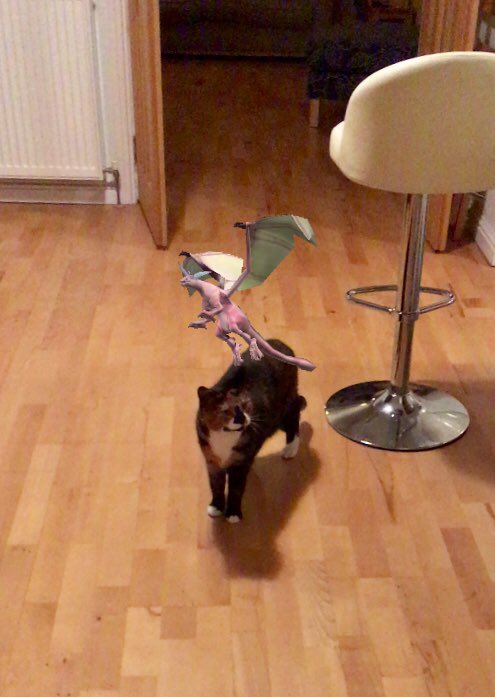
Niko is unimpressed…, CC BY, Lorna M. Campbell

The fun and games kicked off with Festival of Creative Learning in mid February.  My OER Service colleague Charlie ran a really fun and thought provoking 23 Things for Digital Confidence workshop.  The workshop challenged us to explore how we engage with technology in creative ways and we also got to play with some really cool augmented reality toys.  Oh, and there were dragons!  I took them home but I don’t think my cat was very impressed :}

Later in the week I helped to run a Get Blogging! workshop with Karen, Lila and Mark from DLAM, which guided students through the process of setting up a blog on Reclaim Hosting and provided them with some pointers on the benefits of blogging and topics they could write about.  I don’t usually get to work directly with undergraduate students so it was a really rewarding experience.  Their enthusiasm was infectious and it was great to see how proud and excited they were to leave at the end of the day with their very own brand new blog.  The fabulous feedback the students left was just the icing on the cake.  My slides from the day are here: Why Blog?

At the beginning of March we celebrated Open Education Week, I’ve already written a post about the activities we planned over the course of the week, and they all went really well.  We curated eight blog posts from staff, students and graduates on the Open.Ed blog over the course of the week, each bringing a unique perspective on engaging with open education. You can read a round-up of of these posts here.  I particularly like this quote from Martin Tasker, our very first Open Content Curation Intern, who is now building a career as a software engineer.

“In an age where where the world is both more connected and less trusting than ever, the onus is on institutions such as universities to use their reputations and resources to promote open education. As well as benefiting the public, it benefits the institutions themselves – there’s little better in the way of marketing than having potential applicants having already experienced some learning at your institution.” 

I’ve often quoted Martin’s Open Content Curation blog posts when I talk, and I’m sure I’ll be quoting his Open Education Week blog post, Reflecting on the Importance of Open Education, too.  

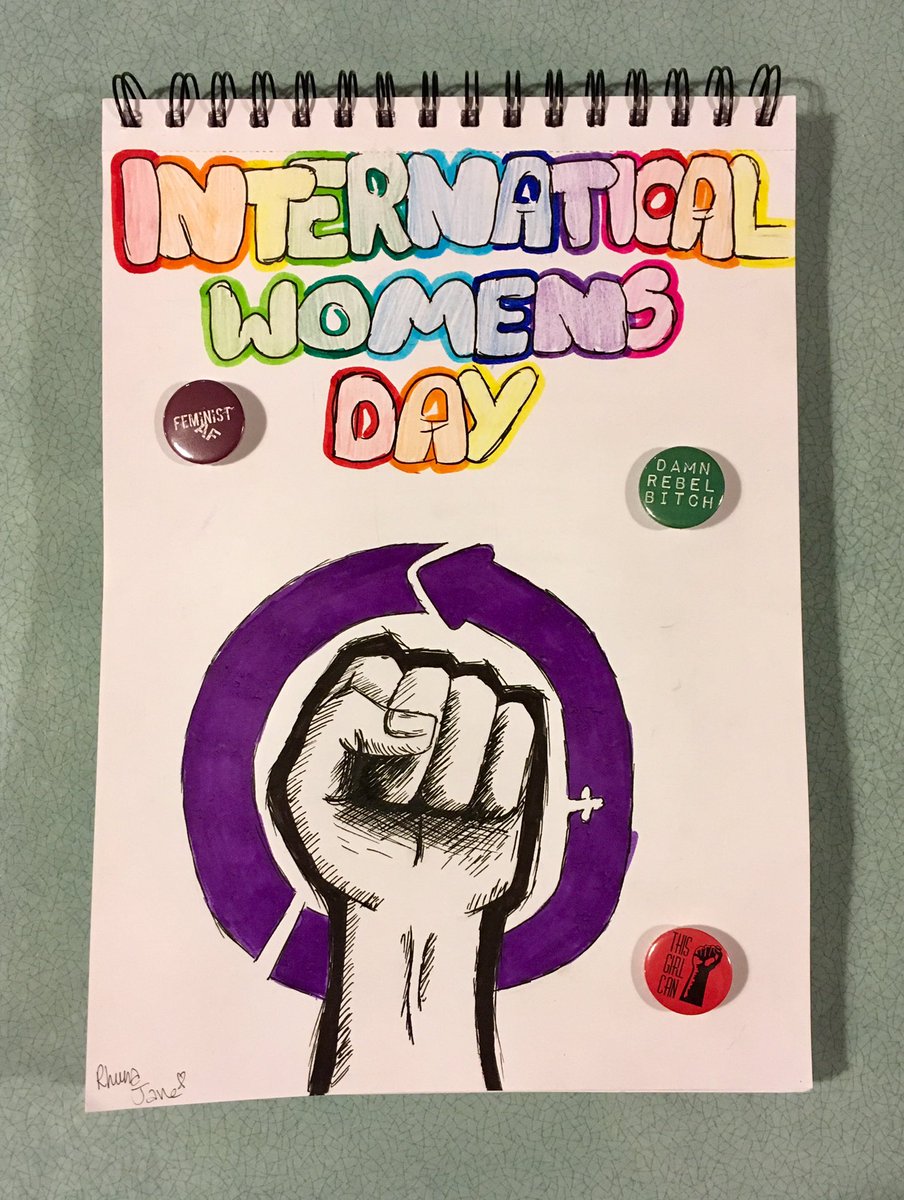
My daughter’s contribution to International Women’s Day, CC BY SA, RJ McCartney

International Women’s Day fell at the end of Open Education Week and Information Services marked the event by hosting a Women of Edinburgh Wikipedia Editathon and naming the Board Room in Argyle House after Brenda Moon, the first woman to head up a research university library in the 1980s, and who played a major role in bringing the University into the digital age. I spent part of the day updating the Wikipedia entry I’d previously written about Mary Susan McIntosh to include information about her work as a Women’s Rights Advocate campaigning for legal and financial rights for married and co-habiting women, defending the right to sexual expression, and arguing against censorship of pornography.  

The following week I was off down to UCL for their Open Education Symposium.  It was a privilege to be invited to share the University of Edinburgh’s strategic approach to Open Education, and it was great to hear about some of ways that openness is supported across UCL.  I particularly enjoyed hearing a group of Arts and Sciences BASc students reflecting on their positive experience of engaging with Wikibooks.  Their comments reflected those of our Edinburgh student who have participated in Wikipedia assignments and editathons. 

Somehow, in amongst all that, there was also several ALTC submissions, the launch of femedtech.net, and my daughter’s 13th birthday.  How the hell did that happen?! 

Sustainable Support for OER

This blog post was originally posted on Open.Ed as part of a series of posts for Open Education Week 2019. 

Sustainability is key to supporting open education and OER, and one factor that lays the foundations for sustainability is aligning the value proposition for OER with an organisation’s institutional mission and strategic vision.

At the University of Edinburgh, we believe that supporting OER is squarely in line with our institutional mission and vision to provide the highest quality learning and teaching environment for the greater wellbeing of our students, challenging the boundaries of knowledge, and making a significant, sustainable and socially responsible contribution to Scotland, the UK and the world.

In 2016 the University launched an OER Service, based in Information Services Group, to support the institution’s new OER Policy.  This policy, which encourages staff and students to use, create and publish OERs to enhance the quality of the student experience, was approved by the University’s Learning and Teaching Committee, situating OER directly in the domain of teaching and learning.  Both the policy and the service are part of the University’s strategic vision for OER which is founded on traditions of the Scottish Enlightenment, excellent education and research collections, and the University’s civic mission.

At the University of Edinburgh one of the key value proposition for OER is that it mitigates the risk of what Melissa Highton, Director of Learning, Teaching and Web services division, and the architect of the University’s OER vision, has referred to as copyright debt; the cost and risk accrued when copyright of teaching and learning resources is not cleared and they are upload to institutional systems.

In order to develop a sustainable approach to address this issue, the OER Service focuses on developing digital skills, copyright and information literacy for staff and students in schools and colleges across the University.  The OER Service embeds digital skills training and support in the institution’s strategic initiatives including lecture recording, academic blogging, VLE foundations, MOOCs and distance learning at scale, to build sustainability, enhance digital literacy, and minimise the risk of technical debt. 

The wide range of digital skills development activities supported by the OER Service includes online courses such as the award winning 23 Things for Digital Knowledge, playful learning initiatives such as Board Game Jams and Gif It Up!, workshops including Blogging to Build Your Professional Profile, and student internships.  All the digital skills training materials we create for these activities are made available as CC BY  licensed open educational resources from our Edinburgh’s OERs showcase.  We hope you find these resources useful.

Spring into Open Education Week

Today marks the start of Open Education Week, the global celebration of the Open Education movement.  Last year my OER Service colleagues and I didn’t participate in Open Education Week as it coincided with the USS Strike so this year, we’re making up for lost time and we’ve got a whole pile of activities and events lined up. 

Open.Ed Spring Newsletter

We’ve published our latest Open.Ed newsletter to coincide with Open Education Week and to highlight events we’ll be running over the course of the week, along with other open activities and initiatives going on around the University.  You can read the latest edition of the newsletter here:  Welcome to the OER Service’s Spring Newsletter, and find back issues of the newsletter here Open.Ed Newsletter.

Open.Ed Blog Series

Over the course of the week, the Open.Ed Blog will be featuring a series of posts from students, staff, and open education practitioners from across the University of Edinburgh, covering a wide range of topics including Masters level OER assignments, Wikipedia and Translation Studies, tools for creating OERs, and much more. The series kicks off today with one post by me on Sustainable Support for OER and another by Jen Ross on Digital Futures for Learning: An OER assignment. 

Supporting Open Education and Open Knowledge at the University of Edinburgh

On Tuesday 5 March at 12.00-13.00, the OER Service will be hosting a free and informal lunchtime webinar during which we’ll be sharing our approaches to supporting Open Education and Open Knowledge at the University of Edinburgh.  Come and join me, Stuart Nicol (Education Design and Engagement), Ewan McAndrew (Wikimedian in Residence), Charlie Farley (OER Service), Rachael Mfoafo (EDE) and Anne-Marie Scott (DLAM) to talk about supporting open education through digital skills development, playful approaches to copyright literacy, embedding Wikipedia in the curriculum, and open approaches to MOOCs and distance learning at scale.  The webinar is free and open to all, joining details are available here.

Decolonise & Diversify the Curriculum with OER

This one-hour workshop on Tuesday 6 March at 12.00 – 13.00 will explore what it means to decolonise and diversify the curriculum with EUSA VP of Education Diva Mukherji. My lovely OER Service colleague Charlie Farley will also demonstrate how creating, using, and sharing OER can be one avenue towards diversifying and opening up curriculum materials. The workshop is open to University of Edinburgh staff and students, further information is available here. 

And of course I’ll be blogging and tweeting on the #OEWeek hashtag and hoping to catch some of the other fabulous activities going on over the course of the week too. 

Daffodils in George Square, CC BY, University of Edinburgh

Mini-series: Don’t panic! Content and copyright for lecture recording

CC0, @finnhackshaw, unsplash

This post previously appeared on the University of Edinburgh’s Teaching Matters blog.

Can I use copyright materials in my lectures? What about film clips? What if my lecture is recorded? How can I make sure I won’t get into trouble? Lorna Campbell and Charlie Farley, from the Educational Design and Engagement team in Learning, Teaching and Web Services, offer some answers to these frequently-posed questions…

Many of the questions and concerns that the OER Service receives from colleagues around the University relate to what kind of content can and can’t be used in lectures.  In order to address these concerns, the OER Service runs a wide range of digital skills training workshops and eventsaround open educational resources (OER) and the use of licensed content in learning, teaching and lecture recording.

The University purchases licenses through a number of agencies, to allow staff to use books, chapters, papers, films, and other resources in our closed teaching spaces. Closed teaching spaces are spaces that are only accessible to registered students and staff, e.g. lecture theatres, labs, tutorial rooms, and EASE authenticated online spaces such as Learn and Moodle. It’s okay to use these licensed resources in your recorded lectures as long as the recording is only shared with our registered students in authenticated spaces.

We also have access to a whole host of OER that we can use in a variety of exciting ways both inside our closed teaching spaces and in open online spaces.

OER are online resources used in the context of teaching and learning that have been released under a Creative Commons licence so they can be reused, remixed and re-purposed by others. The University has an OER Policy that encourages staff and students to use and create OER and you can find and access many of these resources through Open.Ed, our one stop shop for advice and guidance on OER and open licensed content.

The number one tip that we encourage everyone to develop as part of good teaching practice is to get into the habit of providing attribution for all the resources you use in your lectures, including images, diagrams, film clips, audio and text. To attribute a resource you should include title, creator, licence and, where possible, source URL.

If you’re showing a video or film during a recorded lecture, we recommend that you stop the recording at that point, show the film to your students, then resume the recording.  When you’re ready to share the recording, you can then provide a direct link to the film or video so your students can watch it in their own time.

If you’re recording a lecture that you would like to share outside of closed University teaching spaces, e.g. on Media Hopper Create, on a blog, or on the open web, you need to ensure that all the content has either been created by yourself, is outside of copyright protection (i.e. resources that are in the Public Domain by virtue of their copyright term expiring, or CC0 resources that have been placed in the public domain by creators who have chosen to relinquish their rights), or has been released under an open licence.

The University’s OER Service provides all kinds of advice and guidance and training on creating and using digital resources, and understanding copyright and open licensing, so don’t hesitate to get in touch with us though Open.Ed, come along and join some our free events, and sign up for the quarterly OER Service Newsletter.