OER16: Open Culture Conference Overview

Last Friday I was invited to present an overview of the OER16: Open Culture Conference at the eLearning@Ed Conference at the University of Edinburgh, and as part of my talk I included the following summary of our five fabulous keynotes.

Catherine Cronin, National University of Ireland, Galway

Catherine Cronin set the tone for OER16 in her opening keynote asking “If open is the answer what is the question?” She went on to ask us whether we consider ourselves to be open education practitioners or researchers, advocates or critics, wonderers or agnostics. Catherine explored different definitions of openness, stressing the importance of context, and identifying those that may be excluded. In a very personal talk Catherine reminded us that openness is itself personal and that we are all negotiating risk every time we consider sharing. However

“engaging with the complexity and contextuality of openness is important, if we wish to be keepers not only of openness, but also of hope, equality and justice.”

~ Tressy McMillan Cottom, 2015

Catherine Cronin

Catherine Cronin

Emma Smith, University of Oxford

On the week that marked the anniversary of Shakespeare’s death, we were extremely fortunate to have one of the world’s foremost Shakespeare scholars and dedicated open practitioner, Emma Smith, with us. Emma also wins the prize for the best keynote title ever surely with “Free Willy: Shakespeare and Open Educational Resources.” Emma wove together the story of her own open education journey with the colourful history of the Bodleian Library’s First Folio of Shakespeare’s plays. Emma began sharing her lectures online in 2009, an experience that completely transformed her teaching, and her lectures now reach a huge global audience. She suggested that teaching is now a public activity rather than a private one and added;

“You kind of have to get over yourself and let other people see what you’re doing.”

Emma also touched on the issues of privilege, acknowledging the threat of OER and MOOCs from elite institutions being seen as replacements for staff elsewhere, and she asked “To what extent does open reorder hierarchies?” She also entreated her colleagues in the humanities to share their contextual and teaching materials around original sources.

Emma Smith by Brandon Muramatsu

Emma Smith by Brandon Muramatsu

John Scally, National Library of Scotland

Moving from the personal to the institutional John Scally, National Librarian of Scotland, introduced the National Library’s ambitious digital strategy, launched in 2015, which aims to make a third of its renowned collection of 24 million items available online in the next 10 years. John outlined the range of approaches the National Library is taking to open access to its cultural resources and discussed the challenges for leadership in this area at a national level. The Library’s road to openness has been messy and there have been zigzags and potholes along the way, for example there are tensions between preservation and access. John argued that the National Library needs to go further than widening access, it also needs to promote equity, and “openness” can help with that. After John’s keynote one delegate was overhead to comment that higher education institutions could learn a lot from the National Library’s approach to supporting openness at scale.

John Scally by Anna Page, CC BY SA

John Scally by Anna Page, CC BY SA

Jim Groom, Reclaim Hosting

Jim Groom of edupunk, ds106 and Reclaim Hosting notoriety is one of the most infamous characters on the current ed tech circuit and we scored a bit of a coup by inviting him to give his first ever keynote in the UK. Jim presented a challenging and eclectic keynote titled “Can we imagine tech Infrastructure as an Open Educational Resource? Or, Clouds, Containers, and APIs, Oh My!” and true to form he began with a quote from Black Flag guitarist Greg Gin

“If you don’t like ‘the system’ you should create one of your own.”

~ Greg Gin, Black Flag

Jim urged us to turn our attention from open, shareable educational resources, to shared technical infrastructure. Asking what if we focused more on small-scale personal, re-usable software rather than monolithic, institutional solutions? What if we worked towards a collaborative infrastructure for OER that was always framed and scaled at the level of the individual, not unlike the web? With the shift in web infrastructure to the cloud, the advent of APIs and containers, and a burgeoning network of distributed and collaborative ed tech, we may be entering a moment where the open culture of networks is key to a sustainable future for OER.

Jim Groom by @SuperFamicomGuy

Jim Groom by @SuperFamicomGuy

Melissa Highton, University of Edinburgh

Returning to the institutional context, my fellow co-chair Melissa Highton presented the final keynote of OER16 Open with Care, which explored the challenges for leadership in OER, the role of universities in open knowledge communities and the returns and costs associated with institutional investment. Melissa outlined the University of Edinburgh’s policy and vision for OER and reminded us that “education isn’t always about content, but a lot of it is.”

One idea introduced by Melissa, which particularly caught the attention of delegates, was the concept or technical and copyright debt. If you don’t build open licensing into your workflows, you accrue copyright debt for the future. Technical and copyright debt is the price you pay for not doing it properly first time and as a result you end up paying to replace what you already have, rather than building new functionality. So, sustaining OER at scale is a technical issue and IT directors and CIOs need to be persuaded of the value of funding openness.

Melissa Highton by Anna Page, CC BY SA

Melissa Highton by Anna Page, CC BY SA

In conclusion…

It’s difficult to present a neat summary of such a diverse conference but there does appear to be a collective sense of maturing and moving on in the open education community, a willingness to tackle some of the more challenging questions about risk, power and inequality. There may be some residual tension in the OER community between those who have an institutional remit for supporting openness and those who regarded openness as a purely personal practice, however there is a growing appreciation that openness is a digital sensibility that underpins a very wide range of practices.

I’d just like to finish with what I thought was a lovely quote from a blog post written by OER16 delegates and University of Edinburgh MSc in Digital Education postgraduate, Stuart Allen. Stuart wrote ….

“Having a clear, value-driven vision for openness based on ideas of sustainability, civic responsibility and social justice, as advocated by Catherine Cronin and others, represents the very best of what higher education can be (or should be). But when it comes to implementing this vision in a specific context, there are tensions at work between political values, educational aims and pragmatic concerns. These will have to be negotiated with courage and no little skill.”

~ Stuart Allen, Open Culture, Open Questions

All OER16 keynote are available on the ALT Youtube channel.

Why does open matter?

Defining ‘open’ in the context of education.

This piece was originally posted as a feature on the University of Edinburgh’s Teaching Matters site.

Open education has been my passion for a number of years now so when I was invited to write a short piece on why open matters for Teaching Matters I was happy to oblige.

Before trying to explore this question, let me explain what I mean by open education.  Open education is a broad catch-all term that includes open education resources (OERs), massive open online courses (MOOCs), open education practice, open assessment practices (e.g. Open Badges), and other approaches.

In the context of education it can be difficult to pin a single definition on the word “open”.  The open in open educational resources, is different to the open in massive open online courses.

Open educational resources are digital resources used for teaching and learning (e.g. course material, images, multimedia resources) that have been released under an open licence (e.g. Creative Commons) so they can be reused and repurposed by others.  The ability to change and adapt resources is an important aspect of the openness in OER.

MOOCs on the other hand may be free for anyone to join, but frequently the content cannot be accessed or reused outside the course. This sometimes leads to accusations of so-called “open washing”; claiming something is open when really it isn’t.

But why does “open” actually matter in education?  This question is addressed by the Scottish Open Education Declaration produced by Open Scotland, a voluntary cross sector initiative supported by the University of Edinburgh as part of their wider commitment to open education and OER.  Open education in general and OER in particular are part of a worldwide movement to promote and support sustainable educational development. Open education can expand access to education, widen participation, create new opportunities for the next generation and prepare them to become fully engaged digital citizens.

There is also a sound economic case for open education. Releasing publicly funded educational resources under open licences represents a return on investment on public spending. Institutions are already being mandated to publish publicly funded research outputs under open access agreements; surely there is a strong moral argument that publicly funded educational resources should be published under open licences?

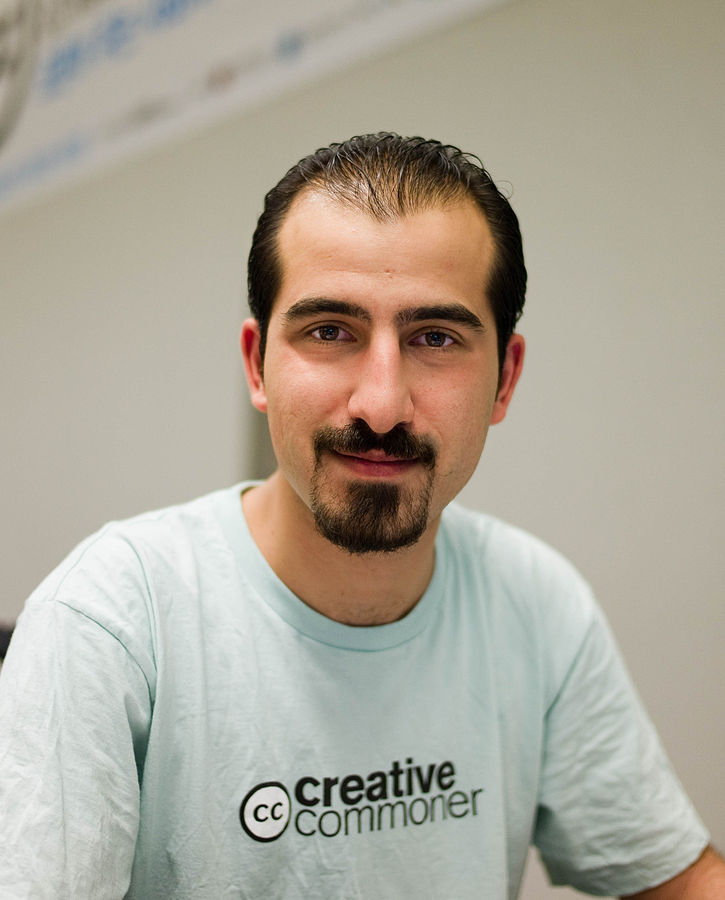
I recently had an opportunity to write a more personal reflection on why I believe open matters in a contribution to the open book Cost of Freedom which aims to raise awareness of the disappearance of detained Syrian internet volunteer and open knowledge advocate Bassel Khartabil.

I believe there is huge creative potential in openness and I believe we have a moral and ethical responsibility to open access to publicly funded educational resources. Yes, there are costs, but they are far outweighed by the benefits of open.

Open education practice and open educational resources have the potential to expand access to education while at the same time supporting social inclusion and creating a culture of collaboration and sharing. There are other more intangible, though no less important, benefits of open. Focusing on simple cost-benefit analysis models neglects the creative, fun and serendipitous aspects of openness and, ultimately, this is what keeps us learning.

teaching matters

#ReadAnneDiary Campaign

anna_frank-infograph1 (1)Today is World Intellectual Property Day and colleagues in Poland and the Netherlands have chosen this date to launch the #ReadAnneDiary campaign which aims to highlight the EU’s current confusing and outdated copyright framework. Readers of this blog will know how strongly I feel that important historical and cultural heritage artefacts are openly licensed and freely available to all, so this is a campaign that I am very happy to highlight and support.  It seems more critical than ever to ensure that important works like The Diary of Anne Frank are freely available for all of us to read and to learn from. 

“Recently, Anne Frank’s famous diary has been in the spotlight because of a copyright dispute about when the literary work enters the public domain. After some intricate legal calculations, it seems that the Dutch version of The Diary of Anne Frank is now in public domain (as of 2016) in Poland, but not in the Netherlands or other EU countries, due to specific aspects of their copyright laws. The patchwork of EU copyright rules are too confusing, and the public is paying the price by not having access to some of their most important creative and cultural works.

On April 26, Centrum Cyfrowe is making available a digital version of The Diary of Anne Frank at the website www.annefrank.centrumcyfrowe.pl. Unfortunately, due to the restrictive territorial rules regarding copyright, the website will only be accessible for users inside Poland. Yes, you read that right: access will be blocked for anyone attempting to view the site from outside of Poland. Why are we doing this? We’re doing it to draw attention to the absurdity of these types of copyright rules. The Diary of Anne Frank is an important historical work—published originally in Dutch in the Netherlands. It should be available in the public domain across Europe. Yet now, it will not be accessible anywhere except for Poland.”

Centrum Cyfrowe
http://www.annefrank.centrumcyfrowe.pl/

OER16: Open Culture – that was the conference that was.

So, the OER16 Open Culture Conference has been and gone and what an experience it was!  Co-chairing OER16 with my inspiring colleague Melissa Highton has been an enormously rewarding experience and I owe a huge debt of thanks to everyone who volunteered their time, effort and creativity to make the conference such a success. In particular I’d like to thank our keynotes, Catherine Cronin, Emma Smith, John Scally, Jim Groom and Melissa Highton for their inspiring and thought provoking talks and, of course, the ALT team for supporting the conference and ensuring everything ran like clockwork.  I can highly recommend charing an ALT conference if you’re ever thinking about it!

oer16_jim_penny

It’s too soon after the event for me to gather my thoughts and attempt to provide any kind of coherent overview so here’s a round up of the conference outputs and some of my personal highlights in lieu of something more considered.

ada_me_oer16

Me & Ada LEGO Lovelace by Stuart Cromar

And of course, my personal twitter highlight of the conference…

oer16_me_josie


Taxi Chic OER16 Co-Chairs Melissa Highton & Lorna Campbell by Catherine Cronin, CC BY SA

Taxi Chic
OER16 Co-Chairs Melissa Highton & Lorna Campbell
by Catherine Cronin, CC BY SA

So now it’s time to pass the torch over to the fabulous Josie Fraser and Alek Tarkowski, two of my favourite people working in open education today, who’ll be co-chairing OER17: The Politics of Open.  It’ll be awesome!


International Women’s Day – Acknowledging the role of Women in OER

IWD-logo-portaitjpgI was surprised and delighted to be included in a blog post from the Open Educational Practices in Scotland project today marking International Women’s Day – Women in OER.  The post celebrates some of the women the project has worked with and I’m honoured to be named alongside such influential open education practitioners as Laura Czerniewicz, Josie Fraser and my old colleague Allison Littlejohn.
The post acknowledges the potential of open education to

“…widen access to education for women and girls, enabling them to access global thought leaders and subjects that might not be available to them locally. It also provides a platform by which women and girls can share their own knowledge and experiences.

There is a role for open education to contribute to closing the gender gap now, to ensure that all genders are treated equally, to facilitate women and girls achieving their ambitions, to challenge discrimination and bias in all forms, to promote gender balanced leadership, to value contributions equally, and to create inclusive and flexible cultures.”

If I can make even a small contribution towards furthering these aims I will be very proud indeed.

University of Edinburgh approves new OER Policy

edinburgh[Cross posted to Open Scotland]

As part of its on going commitment to open education, the University of Edinburgh has recently approved a new Open Educational Resources Policy, that encourages staff and students to use, create and publish OERs to enhance the quality of the student experience. The University is committed to supporting open and sustainable learning and teaching practices by encouraging engagement with OER within the curriculum, and supporting the development of digital literacies for both staff and students in their use of OERs.

The policy, together with supporting guidance from Open.Ed, intends to help colleagues in making informed decisions about the creation and use of open educational resources in support of the University’s OER vision. This vision builds on the history of the Edinburgh Settlement, the University’s excellence in teaching and learning, it’s unique research collections, and its civic mission.

The policy is based on University of Leeds OER Policy, which has already been adopted by the University of Greenwich and Glasgow Caledonian University. It’s interesting to note how this policy has been adapted by each institution that adopts it. The original policy describes open educational resources as

“…digitised teaching, learning and research resources that reside in the public domain or have been released by the copyright owner under an intellectual property licence (e.g. Creative Commons) that permits their use or re-purposing (re-use, revision, remixing, redistribution) by others.”

However Edinburgh has adapted this description to move towards a more active and inclusive definition of OER

“digital resources that are used in the context of teaching and learning (e.g. course material, images, video, multimedia resources, assessment items, etc.), which have been released by the copyright holder under an open licence (e.g. Creative Commons) permitting their use or re-purposing (re-use, revision, remixing, redistribution) by others.”

This definition aims to encompass the widest possible range of resources that can be used in teaching and learning, not just resources that are developed specifically for that purpose. This description acknowledges that it is often the context of use that makes a thing useful for teaching and learning, rather than some inherent property of the resource itself.

Although open licensing is central to the University’s OER vision, this is much more than a resource management policy. In order to place open education at the heart of learning and teaching strategy, the University’s OER Policy has been approved by the Senate Learning and Teaching Committee. The policy is intended to be clear and concise and to encourage participation by all. By adopting this policy, the University is demonstrating its commitment to all staff and students who wish to use and create OERs in their learning and teaching activities, and who wish to disseminate the knowledge created and curated within the University to the wider community.

600x60-oew-web-banner

OER16 Open Culture Conference – Open as in Open

In keeping with the ethos of open education, the OER conferences have always made an effort to be as diverse, inclusive and, well, open as possible and OER16 Open Culture is no exception.

The draft conference programme has recently been announced and we’re delighted to have accepted 101 papers and panels from 29 different countries.

oer16_diversity

OER16 presenters will come from 29 countries around the world

Bearing the recent #allmalepanels meme in mind, we’re also aware of issues relating to gender balance and diversity and we’re very pleased to have almost 50/50 representation. Of over a hundred lead authors who recorded their gender along with their submission, 49% are female and 51 % male, and our keynotes are similarly balanced.

Although the University of Edinburgh is clearly a popular destination for delegates, not all of our presenters and participants are able to travel to Scotland for a wide range of reasons, so we are happy to facilitate remote presentation. One OER16 presenter Maha Bali, associate professor of practice at the Center for Learning and Teaching at the American University in Cairo, has previously written in the Chronicle of Higher Education about her own experiences as a remote conference presenter

“I am finding more and more conferences willing to accommodate me as a virtual presenter. This is probably happening more to me than other people because of my travel restrictions (mom of a young child living halfway across the world from most conferences I want to attend and where most of my collaborators reside), coupled with my refusal to ignore the potential social capital I can gain from presenting internationally, that is different from everyday online interactions. There are many reasons why a conference might want to welcome virtual presenters (diversity and equity being two)”

Hospitality for Virtual Presenters by Maha Bali
Chronicle of Higher Education, January 26, 2016

In relation to OER16, Maha also commented:

“Presenting virtually at conferences allows me to have a voice in the field. How often do people in ed tech get to hear the perspective of Arab Muslim women who live in the Arab World? Presenting coupled with virtually connecting conversations allows me to feel more of an equal to my Western peers with whom I collaborate year-round.”

In order to ensure that OER16 is inclusive and accessible, we have aimed to keep the conference fee as low as possible for full delegates. However if cost is a genuine barrier, ALT have a small amount of limited funding available to subsidise registrations for presenters who are students, school teachers, who work in small FE institutions, adult or community education or are members of the public with a special interest in OER. Subsidised places have already been offered to fourteen presenters and applications of funding close on the 6th March.

OER16 also offers many opportunities for remote participation, the majority of which are completely open and free of charge. All five keynotes by Catherine Cronin, Jim Groom, Melissa Highton, John Scally and Emma Smith will be streamed live on ALT’s dedicated youtube channel, and will also be available to view after the conference. There will be a wide range of social media channels including twitter feeds, blogs, hang outs and internet radio broadcasts, facilitated by the ALT Open Education SIG, Radio EDUtalk, Virtually Connecting and others, which will enable remote participants to engage with and contribute to the conference. Remote participants will only be required to register their details if they wish to comment on the main conference platform hosted by ALT, although registration will be required, this facility is still free of charge, all other remote participation channels are both free and open, and yes, that really is open as in open.

Cultural Heritage Sparks

I recently went along to the first meeting of the Digital Cultural Heritage Research Network here at the University of Edinburgh. The aim of the network is to

“bring together colleagues from across the University to establish a professional network for researchers investigating digital cultural heritage issues, seeking to include perspectives from diverse disciplines including design, education, sociology, law, cultural studies, informatics and business. Partners from the cultural heritage sector will play a key role in the network as advisors and collaborators.”

~ About DCHRN

Anyone who follows this blog will know that I have a bit of a thing about opening access to digital cultural resources so I was pleased to be able to contribute a lightning talk on digital cultural heritage and open education. This was one of an eclectic series of lightning talks that covered a wide range of subjects and topics.  I live tweeted the event and Jen Ross has collated tweets from the day in a Storify here: Digital Cultural Heritage Research Network, Workshop 1 and has also written a recap of the workshop here Recap of Workshop 1: Cultural Heritage Sparks.

My EDINA colleague Lisa Otty kicked off the day talking about the Keepers Extra Project which aims to highlight the value of the Keepers Registry of archiving arrangements for electronic journals. Lisa noted that only 17% of journals are archived in the Keepers Registry and asked the very pertinent question “do we trust publishers with the stewardship of electronic journals?” I think we all know the answer to that question.

I confess I rehashed a previous presentation on the comparative dearth of openly license cultural heritage collections in Scotland which allowed me to refer for the millionth time to Andrew Prescott’s classic blog post Dennis the Paywall Menace stalks the Archives. This time however I was able to add a couple of pertinent tweets from the Digging Into Data Round Three Conference that took place in Glasgow earlier in the week.

did_tweet_1 did_tweet_2

One lightning talk that was particularly close to my heart was by Glyn Davis who spoke about the openness, or lack thereof, of gallery and museum content, and reflected on his experience of running the Warhol MOOC.  Glyn noted that license restrictions often prevent copyright images from being used in online teaching and learning, however many of the students who participated in the Warhol MOOC understood little about copyright restrictions and simply expected to be able to find and reuse images via google, so lots of discussion about open access was required as part of the course.

www.artcastingproject.net

www.artcastingproject.net

Other highlights included Jen Ross‘ talk on Artcasting a project which is exploring how digital methods can be used inventively and critically to reimagine complex issues. The project has built an app which engages audiences by allowing them to capture images and decide where to send them in time and space and time, while also retrieving data for evaluation.  Bea Alex introduced the impressive range of projects from the Language Technology Group, including historical text projects, which aim to use text mining to enrich textual metadata with geodata from the Edinburgh Geo Parser. Stephen Allen spoke about the MOOC the National Museums of Scotland created to run in parallel with their Photography – A Victorian Sensation exhibition.  The museum now hopes to reuse content from future exhibitions for more MOOCs. Rebecca Sinker presented a fascinating keynote on Tate’s research-led approach to digital programming which prompted an interesting discussion on how people engage with art now that so much of it is available online. Angelica Thumala spoke all too briefly about her research exploring emotional attachment and experience of books in different modalities, and left us with one of the loveliest quotes of the day

“Books are constant companions, people carry them around and develop physical and emotional attachments to them.”

The workshop ended with four group discussions focussing on issues raised by participants; openness and preservation; participation and interpretation; semantic web and curation; and how can DCHRN create a sustainable interdisciplinary network.  These and other issues will be picked up in the next workshop Research that matters – playing with method, planning for impact takes place in March

DCHRN is coordinated by:

  • Dr Jen Ross, Digital Education
  • Dr Claire Sowton, Digital Education
  • Professor Sian Bayne, Digital Education
  • Professor James Loxley,  Literatures Languages and Culture
  • Professor Chris Speed, Design Informatics

On a side note, it’s a while since I’ve done a lightning talk and I’d forgotten how difficult it is to put together such a short presentation. Seriously, it took me most of an afternoon to put together a 5 minute talk which really is a bit ridiculous. Seems like I’m not the only one who struggles with short presentations though, when I moaned about this on twitter, a lot of people replied agreeing that the shorter the presentation, the more preparation is required. Martin Weller reminded me of the quote “If I had more time, I would have written a shorter letter”, while Kevin Ashley invoked Jeremy Bentham who was allegedly happy to give a two hour speech on the spot, but a fifteen minute talk required three weeks notice.  I guess I’m with Bentham on that one!

The Cost of Freedom – What is Open?

Another gem from The Cost of Freedom project, this time by Richard Goodman (@bulgenen), my partner in crime from the ALTC-2016 social media team.  I was chuffed to bits when Rich decided to write something for the project.  You can read his poem What is Open? here.

As part of disquiet Junto Project 0202 Text-to-Speech-to-Free Rich’s poem has also been recorded by Michel Banabila who created this amazingly atmospheric remix.

Links

The Cost of Freedom – The Open World

Based on an original painting by Omar Ibrahim, designed by Julien Taquet.

Based on an original painting by Omar Ibrahim, designed by Julien Taquet.

Towards the end of last year, following an invitation from Adam Hyde of booksprints.net, I wrote a contribution for a free and open online book called The Cost of Freedom.  The book is dedicated to Syrian internet volunteer and open knowledge advocate Bassel Khartabil, باسل خرطبيل‎, who has been detained in Syria since March 2012. On the 3rd October 2015 Bassel’s name was deleted from the Adra Prison’s register where he was detained and no further information has been obtained about his whereabouts.

The Cost of Freedom is not a statement about freedom and culture — it is a primal scream — the sum of our questions and desires. It is the raw expression of our lives. It talks about what is ultimately made through the dream of free culture: us.

~ The Cost of Freedom

The book was written in Pourrières in France during a five day book sprint in early November 2015, with additional contributions being submitted by writers from all over the world. Here’s my contribution, a personal reflection on what openness means to me.

"Bassel Khartabil (Safadi)" by Joi Ito - http://www.flickr.com/photos/joi/4670781482CC BY 2.0

“Bassel Khartabil (Safadi)” by Joi Ito – http://www.flickr.com/photos/joi/4670781482 CC BY 2.0

The Open World

In Open is not a License Adam Hyde has described openness as

‘a set of values by which you live…a way of life, or perhaps a way of growing, an often painful path where we challenge our own value system against itself.’

To my mind, openness is also contradictory. I don’t mean contradictory in terms of the polar dichotomy of open vs. closed, or the endless debates that seek to define the semantics of open. I mean contradictory on a more personal level; openness raises contradictions within ourselves. Openness can lead us to question our position in the world; our position in relation to real and perceived boundaries imposed from without and carefully constructed from within.

In one way or another I have worked in the open education space for a decade now. I have contributed to open standards, created open educational resources, developed open policy, written open books, participated in open knowledge initiatives, facilitated open events, I endeavour to be an ‘open practitioner’, I run a blog called Open World. However, I am not by nature a very open person; my inclination is always to remain closed. I have had to learn openness and I’m not sure I’m very good at it yet. It’s a continual learning experience. Openness is a process that requires practice and perseverance. (Though sometimes circumstances leave us with little choice, sometimes it’s open or nothing.)

And of course, there is a cost; openness requires a little courage. When we step, or are pushed, outside our boundaries and institutions, it’s easy to feel disoriented and insecure. The open world can be a challenging and unsettling place and it’s easy to understand the impulse to withdraw, to seek the security of the familiar.

When large scale open education funding programmes first started to appear, (what an impossible luxury that seems like now), they were met with more than a little scepticism. When a major OER funding initiative was launched in the UK in 2009 (UKOER), the initial response was incredulity (OER Programme Myths). Surely projects weren’t expected to share their resource with everyone? Surely UK Higher Education resources should only be shared with other UK Higher Education institutions? It took patience and persistence to convince colleagues that yes, open really did mean open, open for everyone everywhere, not just open for a select few. One perceptive colleague at the time described this attitude as ‘the agoraphobia of openness’(1).

Although open licences and open educational resources are more familiar concepts now, there is still a degree of reticence. An undercurrent of anxiety persists that discourages us from sharing our educational resources, and reusing resources shared by others. There is a fear that by opening up our resources and our practice, we will also open ourselves up to criticism, that we will be judged and found wanting. Imposter syndrome is a real thing; even experienced teachers may fail to recognise their own work as being genuinely innovative and creative. At the same time, openness can invoke a fear of loss; loss of control, loss of agency, and in some cases even loss of livelihood. Viewed through this lens, the distinction between openness and exposure blurs.

But despite these costs and contradictions, I do believe there is inherently personal and public value in openness. I believe there is huge creative potential in openness and I believe we have a moral and ethical responsibility to open access to publicly funded educational resources. Yes, there are costs, but they are far outweighed by the benefits of open. Open education practice and open educational resources have the potential to expand access to education, widen participation, and create new opportunities while at the same time supporting social inclusion, and creating a culture of collaboration and sharing. There are other more intangible, though no less important, benefits of open. Focusing on simple cost-benefit analysis models neglects the creative, fun and serendipitous aspects of openness and, ultimately, this is what keeps us learning.

In the domain of knowledge representation, the Open World Assumption ‘codifies the informal notion that in general no single agent or observer has complete knowledge’. It’s a useful assumption to bear in mind; our knowledge will never be complete, what better motivation to keep learning? But the Open World of my blog title doesn’t come from the domain of knowledge representation; it comes from the Scottish poet Kenneth White (2), Chair of 20th Century Poetics at Paris-Sorbonne, 1983-1996, and a writer for whom openness is an enduring and inspiring theme. White is also the founder of the International Institute of Geopoetics, which is ‘concerned, fundamentally, with a relationship to the earth and with the opening of a world’ (3). In the words of White:

no art can touch it; the mind can only

try to become attuned to it

to become quiet, and space itself out, to

become open and still, unworlded (4)

disquiet ambient/electronica have recorded a number of the contributions to the book, including mine, which you can listen to here.

References

  1. I cannot remember who said this, but the comment has always stayed with me.
  2. White, K., (2003), Open World. The Collected Poems, 1960 – 2000, Polygon.
  3. White, K., (2004), Geopoetics: place, culture, world, Alba.
  4. White, K., (2004), ‘A High Blue Day on Scalpay’ in Open World. The Collected Poems, 1960 – 2000, Polygon.

Links